 CibilBazaar
Sign in to your account
Access your loan applications, track status, and get personalised offers.
Continue with Google
CibilBazaar
Access your loan applications, track status, and get personalised offers.
Continue with Google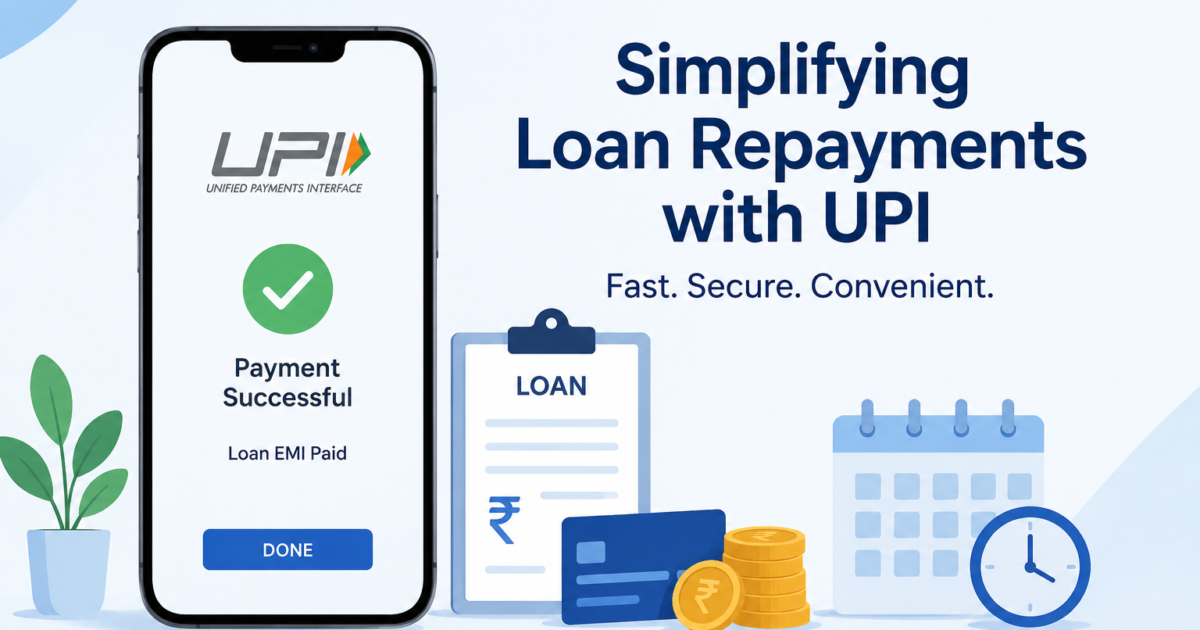
The Unified Payments Interface (UPI) has fundamentally changed the way people in India make and receive payments. From everyday purchases and utility bills to large-value financial transactions, UPI has made digital payments faster, simpler, and more accessible.
One area where this transformation is becoming increasingly significant is loan repayment. By enabling convenient and near-instant digital payments, UPI is helping borrowers manage their EMIs with greater ease while allowing lenders to streamline their collection processes.
Loan repayments were traditionally handled through methods such as post-dated cheques, ECS mandates, and bank auto-debits. While these systems remain in use, they can sometimes involve processing delays, failed transactions, or additional operational effort.
UPI offers a more convenient alternative by allowing borrowers to make payments directly through their smartphones. With participating lenders and payment systems, borrowers can receive immediate confirmation of successful transactions, making the repayment experience more transparent and convenient.
One of the biggest advantages of UPI is the speed of transaction processing. Borrowers can make their EMI payments digitally and receive confirmation almost immediately.
This reduces uncertainty around whether a payment has been successfully completed and can help borrowers avoid unnecessary delays in repayment.
UPI eliminates the need for physical cheques or lengthy payment procedures. Borrowers can initiate payments through their preferred UPI-enabled application using their smartphone.
This convenience is particularly useful for customers who prefer managing their financial commitments digitally.
Depending on the lender’s repayment policies, borrowers may be able to use UPI for manual EMI payments and certain other permitted payments.
Digital repayment options provide customers with greater control over when and how they complete their payment obligations.
UPI transactions generate digital records and notifications, making it easier for borrowers to track their payments.
Having a clear transaction history can help customers maintain better records of their financial commitments and identify successful or failed transactions quickly.
UPI AutoPay enables customers to authorise recurring payments through a UPI mandate, where supported by the lender and payment system.
For eligible EMI arrangements, this can reduce the need for borrowers to manually initiate every monthly payment and can help maintain greater repayment discipline.
The advantages of UPI-based repayments extend beyond borrowers. Lenders can also benefit from faster and more efficient digital collection mechanisms.
Digital payment options can make it easier for customers to complete their repayment obligations, potentially reducing payment delays.
Compared with paper-based collection methods, digital payments can reduce manual reconciliation and processing requirements.
A simple repayment journey can improve customer satisfaction. Instant payment notifications and digital records give borrowers greater visibility over their transactions.
UPI has extensive adoption across India, allowing lenders to provide convenient digital repayment options to a broad customer base.
Recurring payment solutions are becoming an important part of India’s digital lending ecosystem. UPI AutoPay allows customers to set up authorised recurring mandates, where available, for regular payments.
For borrowers, this can make monthly repayment more convenient. For lenders, automated collection mechanisms can improve repayment efficiency and reduce dependence on manual follow-ups.
However, customers should always review the mandate details, payment amount, frequency, and cancellation terms before authorising recurring payments.
As India’s digital payment ecosystem continues to expand, UPI is likely to play an increasingly important role in financial services, including loan repayments.
The combination of real-time payment confirmation, digital records, convenient access, and recurring payment capabilities can create a smoother repayment experience for both borrowers and lenders.
As lenders continue to adopt digital-first servicing and collection systems, UPI can become an increasingly important component of the modern loan repayment journey.
UPI has evolved far beyond its original role as a convenient payment method. It is now becoming an important part of India’s broader digital financial ecosystem, including loan servicing and repayments.
For borrowers, UPI offers speed, convenience, transparency, and greater control over digital payments. For lenders, it can support efficient collections, reduced operational friction, and an improved customer experience.
As digital lending and payment infrastructure continue to evolve, UPI is set to remain an important technology shaping the future of loan repayments in India.
Free check • No spam • Offers from 50+ lenders
Check Eligibility →